The beginner and advanced course belt gradings were held in Riihimäki on 28 March 2026.
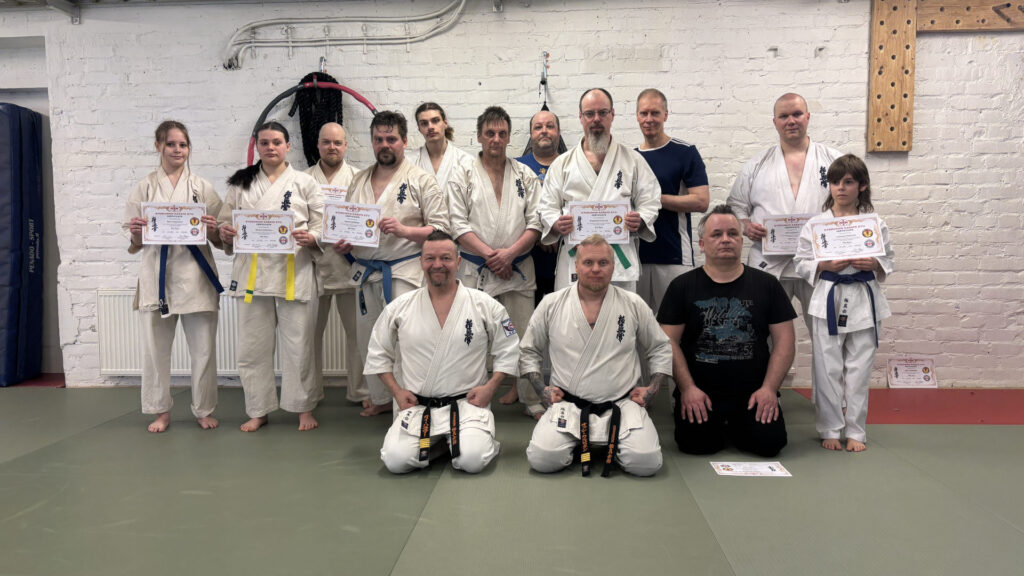
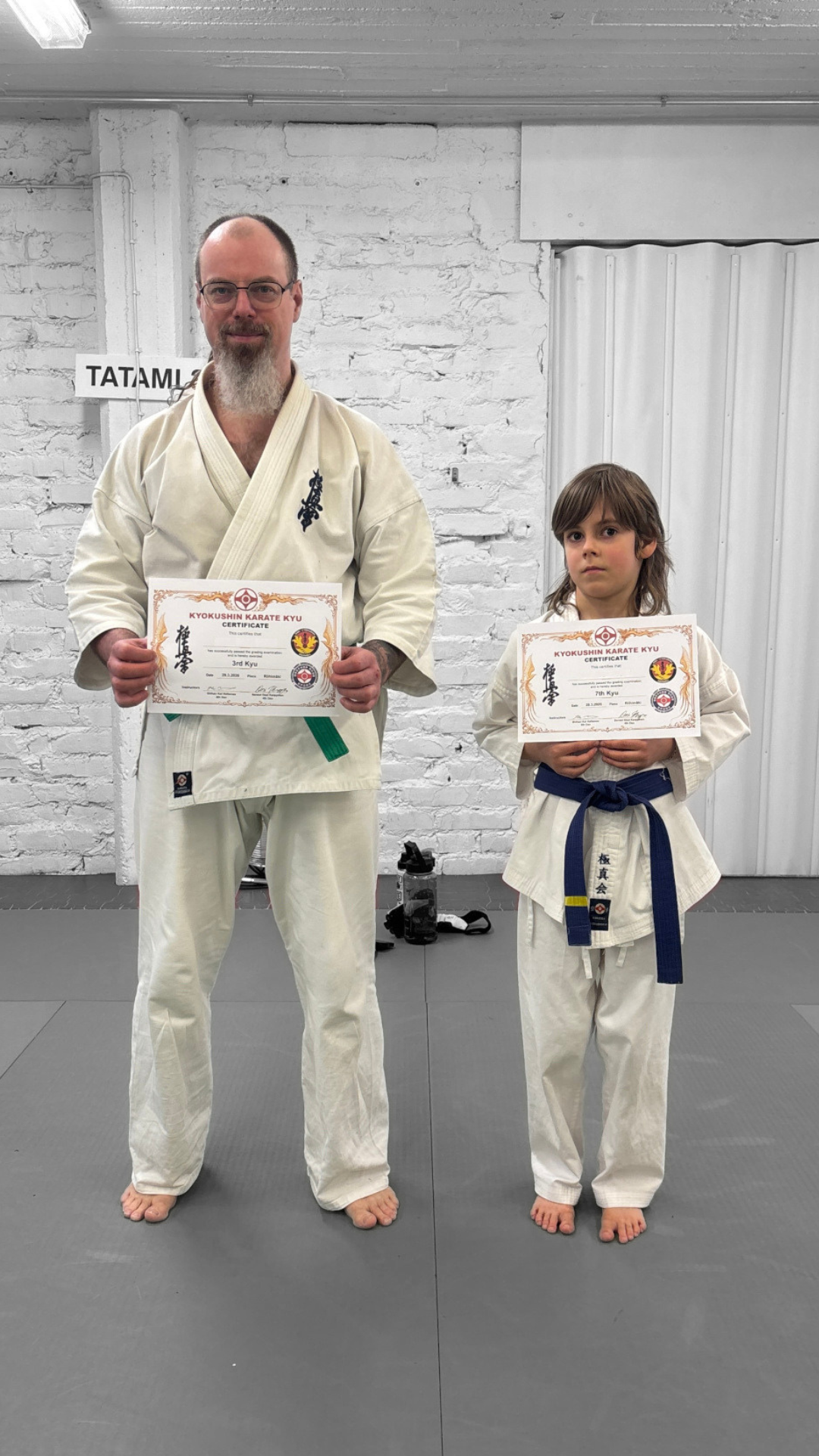
Sisu-Kyokushin ry held belt gradings for the beginner and advanced courses at Riihimäki Martial Arts Centre on 28 March 2026. Four beginner course students and eight karateka with more experience in the art came to demonstrate their skills.
The content of this article is structured to follow an actual belt grading, while briefly explaining what it includes. In practice, all participants go through the entire grading in the order shown below.
This particular belt grading lasted about three hours, and almost all of that time was spent actively training, apart from a few short drink breaks.
Content of the belt grading
Kyokushin belt gradings usually begin in the same way as regular training sessions, following a structure based on dojo etiquette. The opening and closing rituals emphasize respect, focus, and the seriousness of the training.
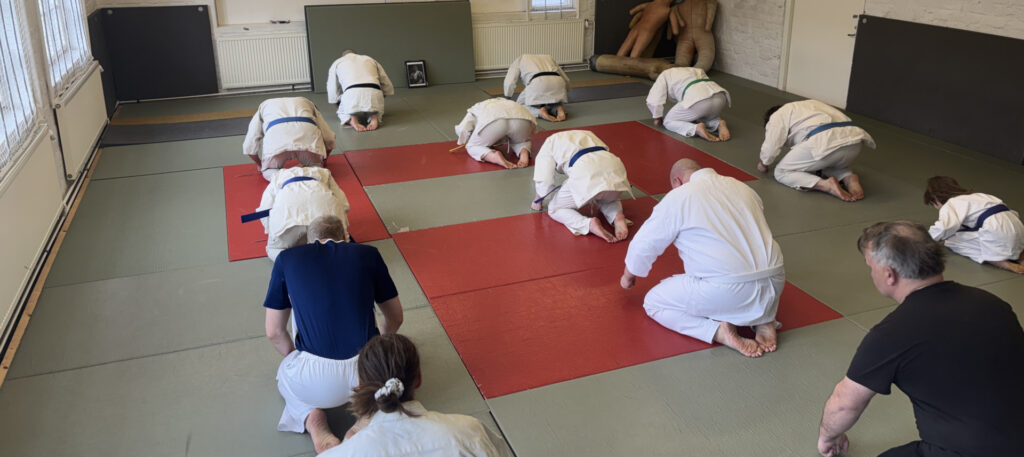
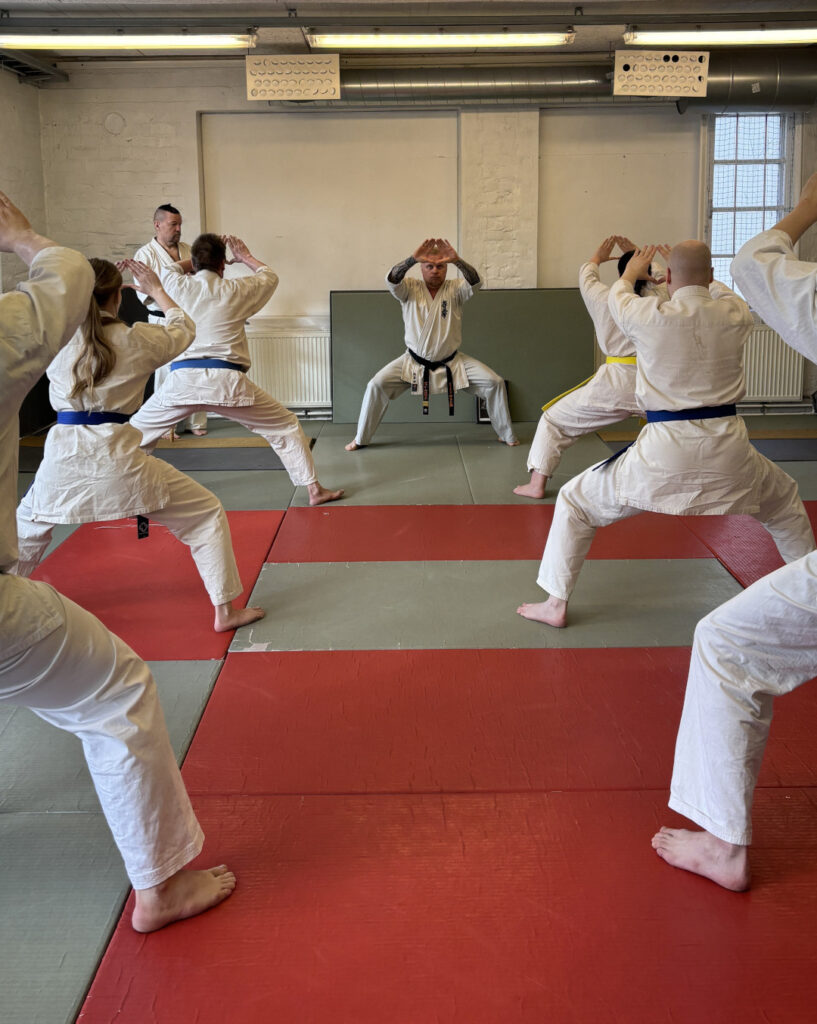
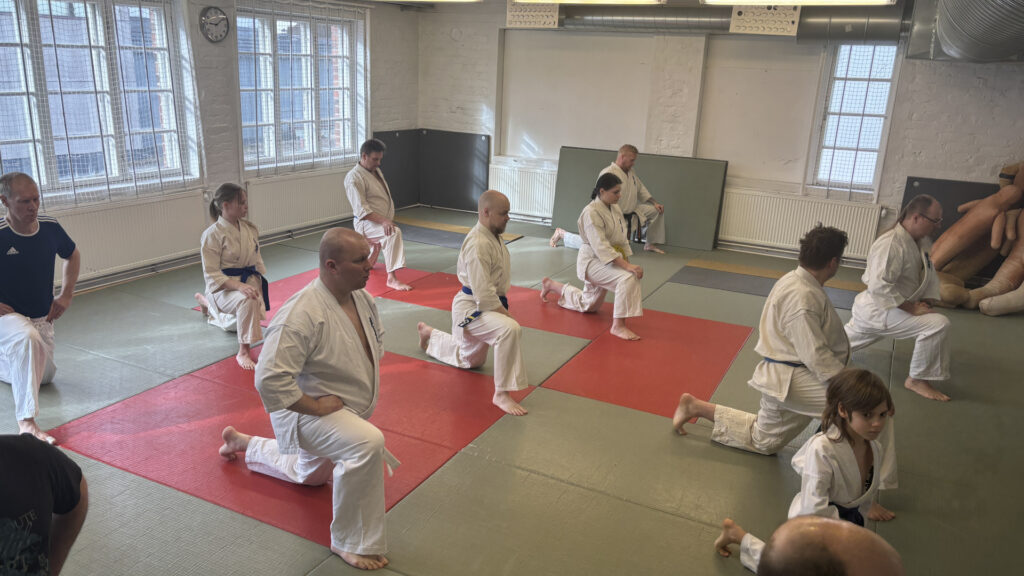
Stretching and warm-up
The training begins with preparing the body, with the purpose of preventing injuries and physically preparing the candidates for the demanding performance ahead.
Fitness section
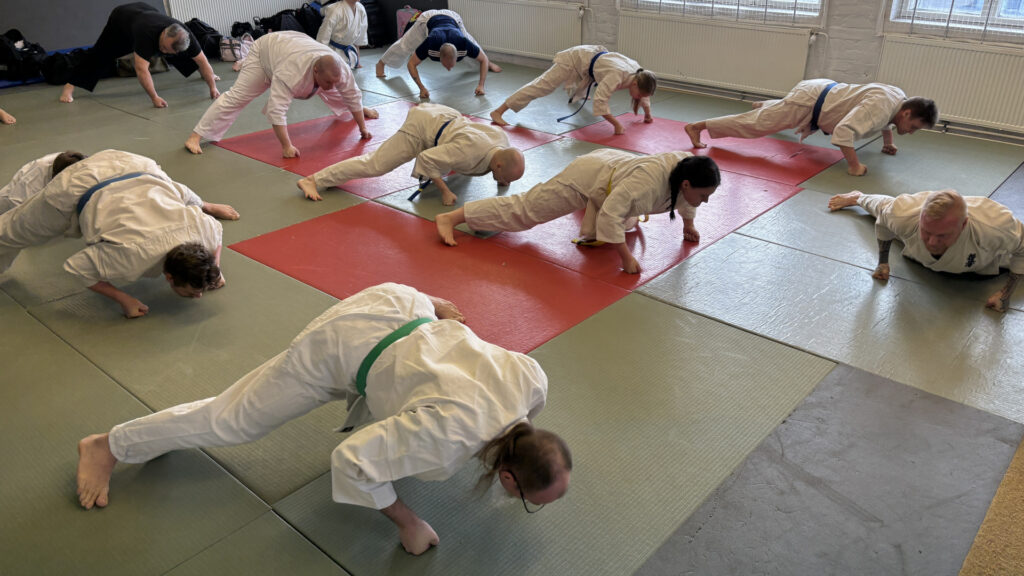
The candidates’ physical fitness is assessed throughout the entire belt grading. In addition, the candidates perform various exercises to demonstrate sufficient physical fitness, which is determined by the belt rank they are aiming for. Fitness exercises may include different types of squats, abdominal exercises, and push-ups.
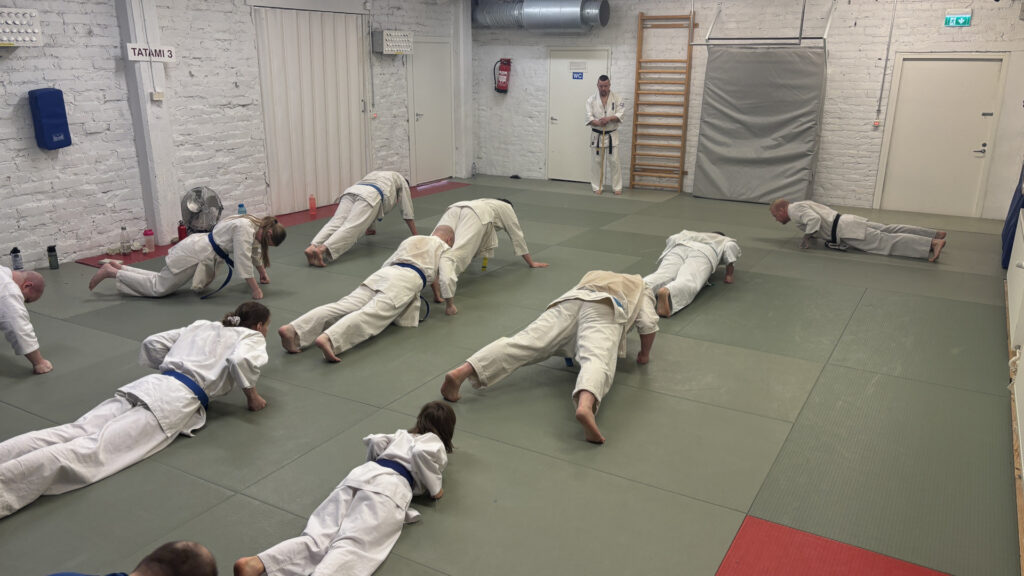
The image below shows just one individual push-up exercise carried out between other activities. The purpose of this is to help ensure that sufficient body warmth is maintained 🙂
Mental endurance and attitude – Osu, SISU
In addition to physical skill, attitude is essential. The candidate is expected to show respect, perseverance, and the ability to continue performing despite fatigue.
Kihon – basic techniques
Basic techniques consist of stances, punches, kicks, and blocks. The performances are assessed based on technical cleanliness, power, balance, and control.
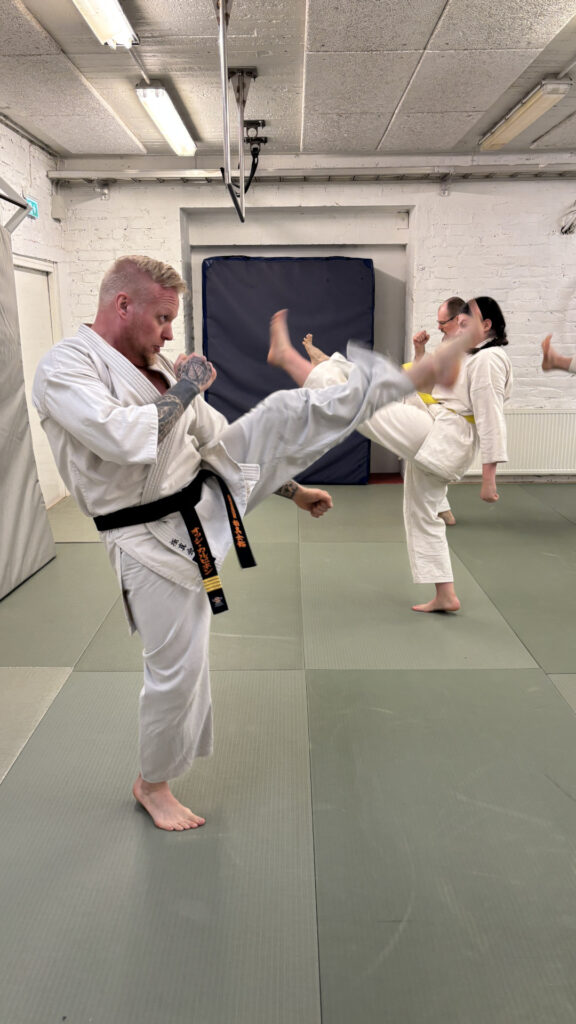
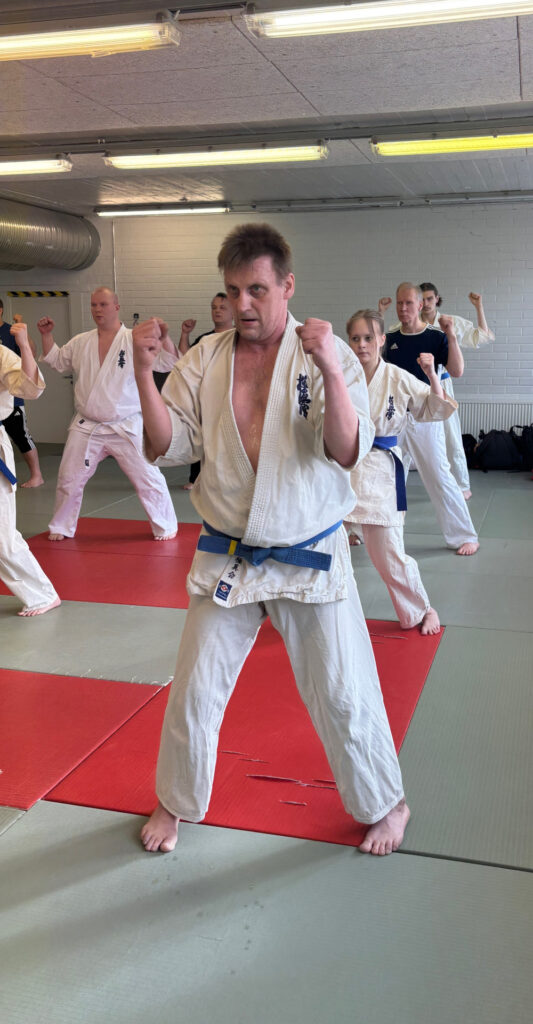
IDO kihon – basic techniques in movement
In this section, basic techniques are performed while moving forward, backward, and sideways. The techniques are often performed as combinations, where movement and technique form a unified whole.
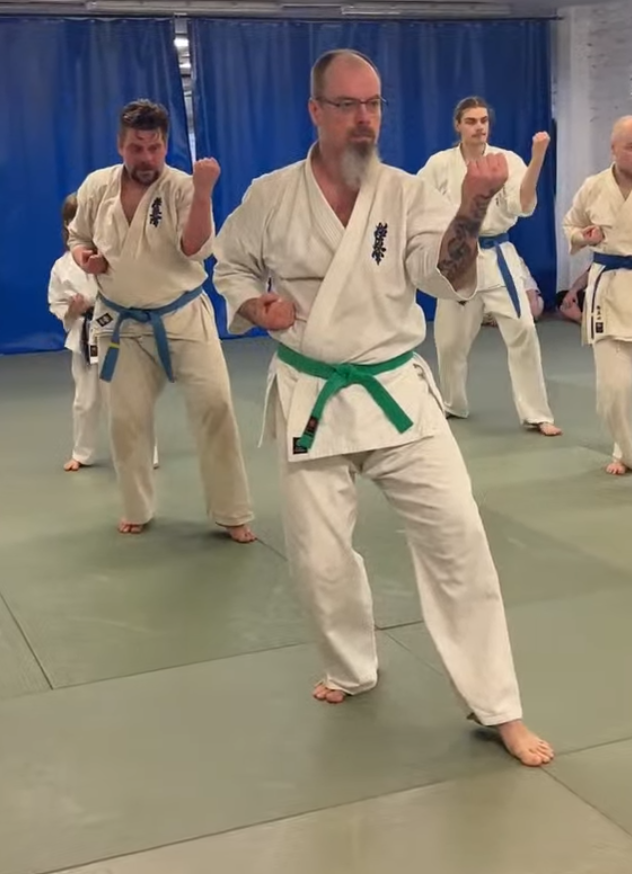
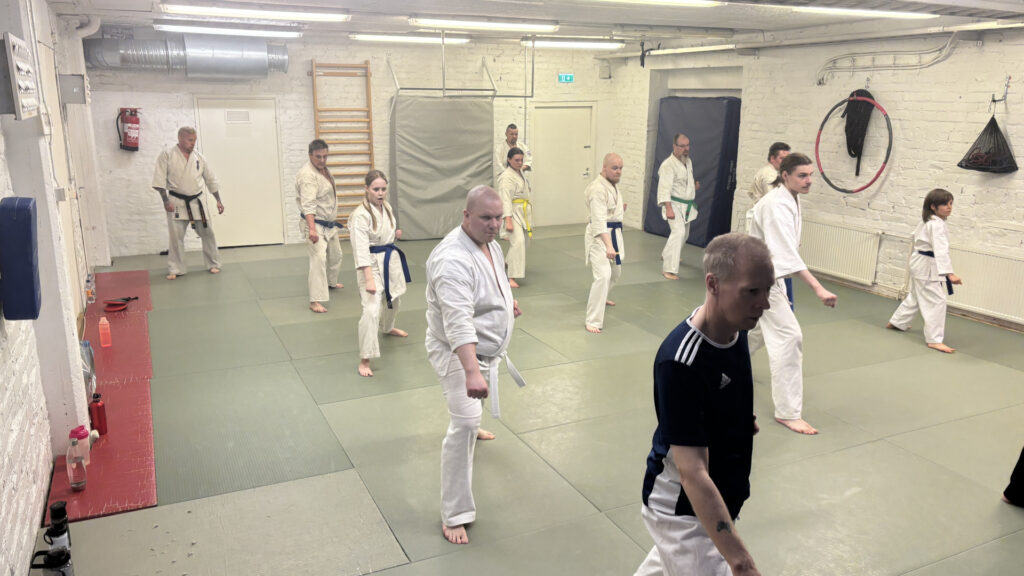
Kata
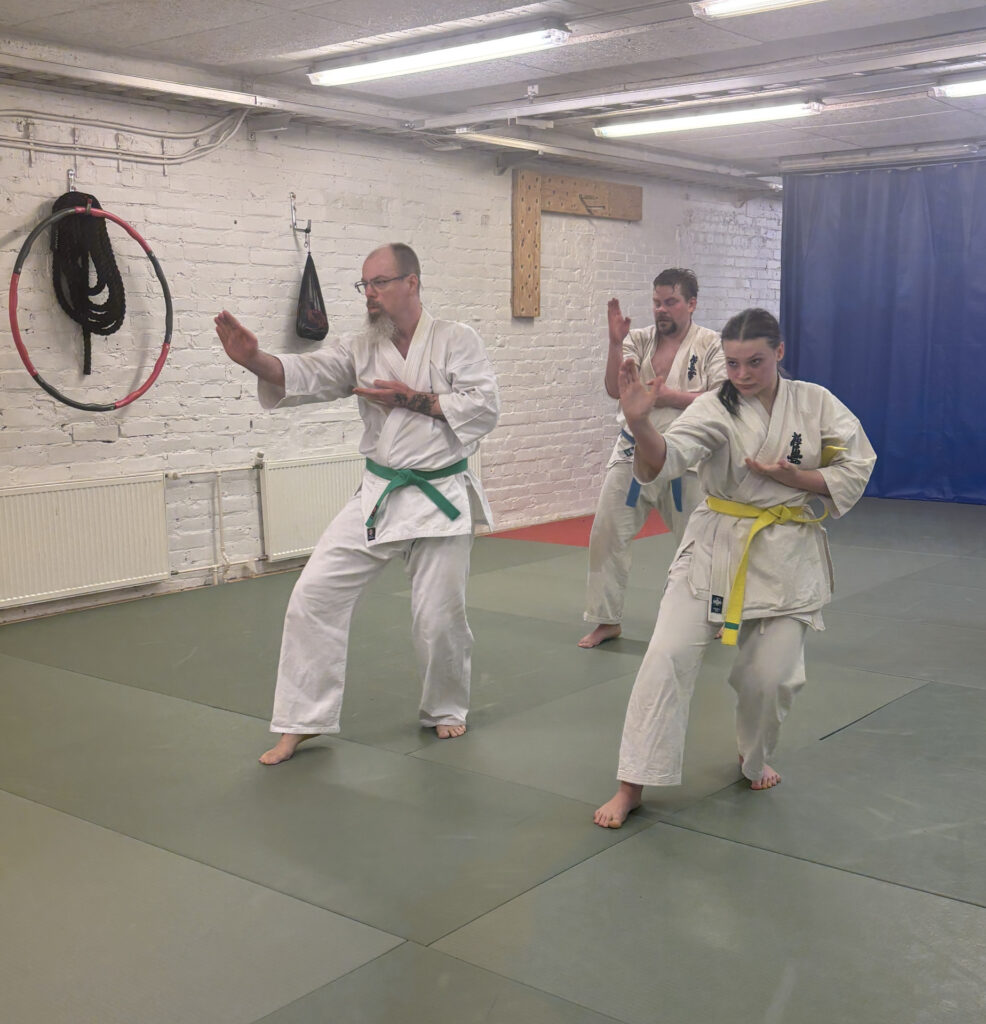
Kata is a predetermined form in which technique, rhythm, and breathing come together. The katas to be performed are determined by the belt rank being tested. The performance is assessed based on memorization of the forms, technical cleanliness, focus, rhythm, and timing.
Kumite – sparring
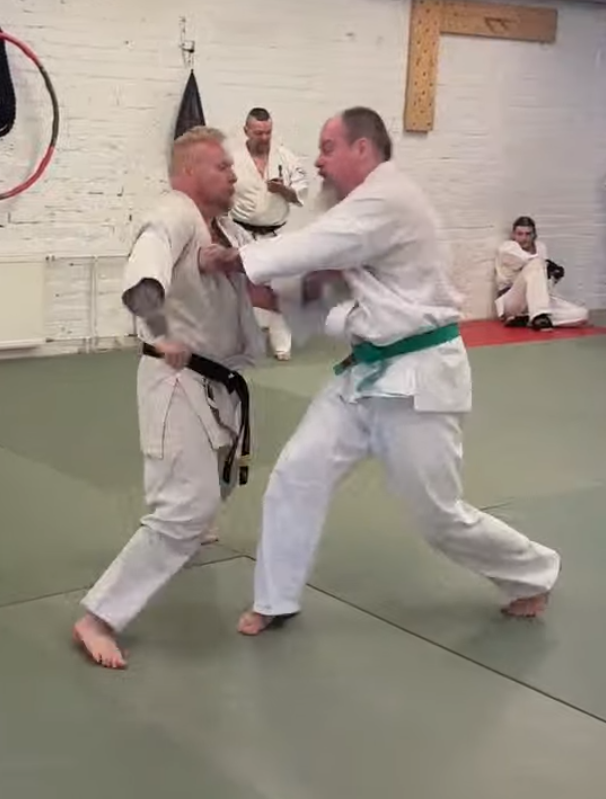
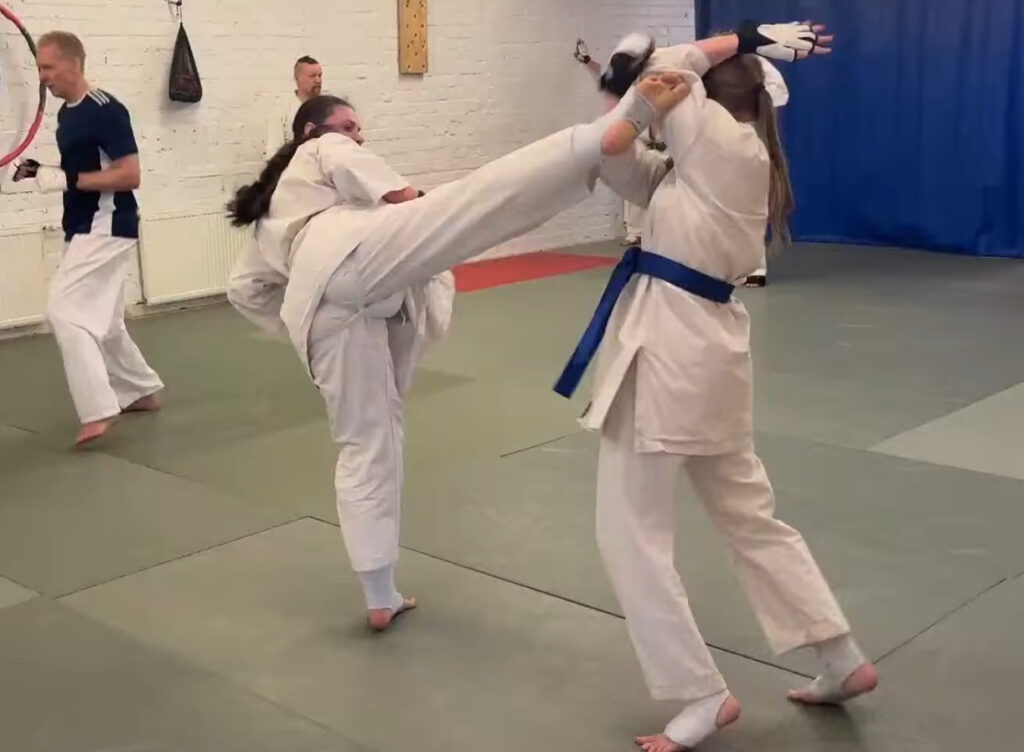
Kumite is a physical, pair-based semi-contact fight in which the candidate’s fighting spirit, ability to use technique under pressure, and physical endurance are tested. In the belt grading, the focus is on controlled performance, not maximum use of force.
Afterword
After nearly three hours of hard work, the belt grading was finally brought to a close. All participants showed a strong attitude and completed the grading with the seriousness it required. They had the opportunity to demonstrate their skills in a belt grading supervised by Shihan Hallamaa and led by Sensei Karppinen.
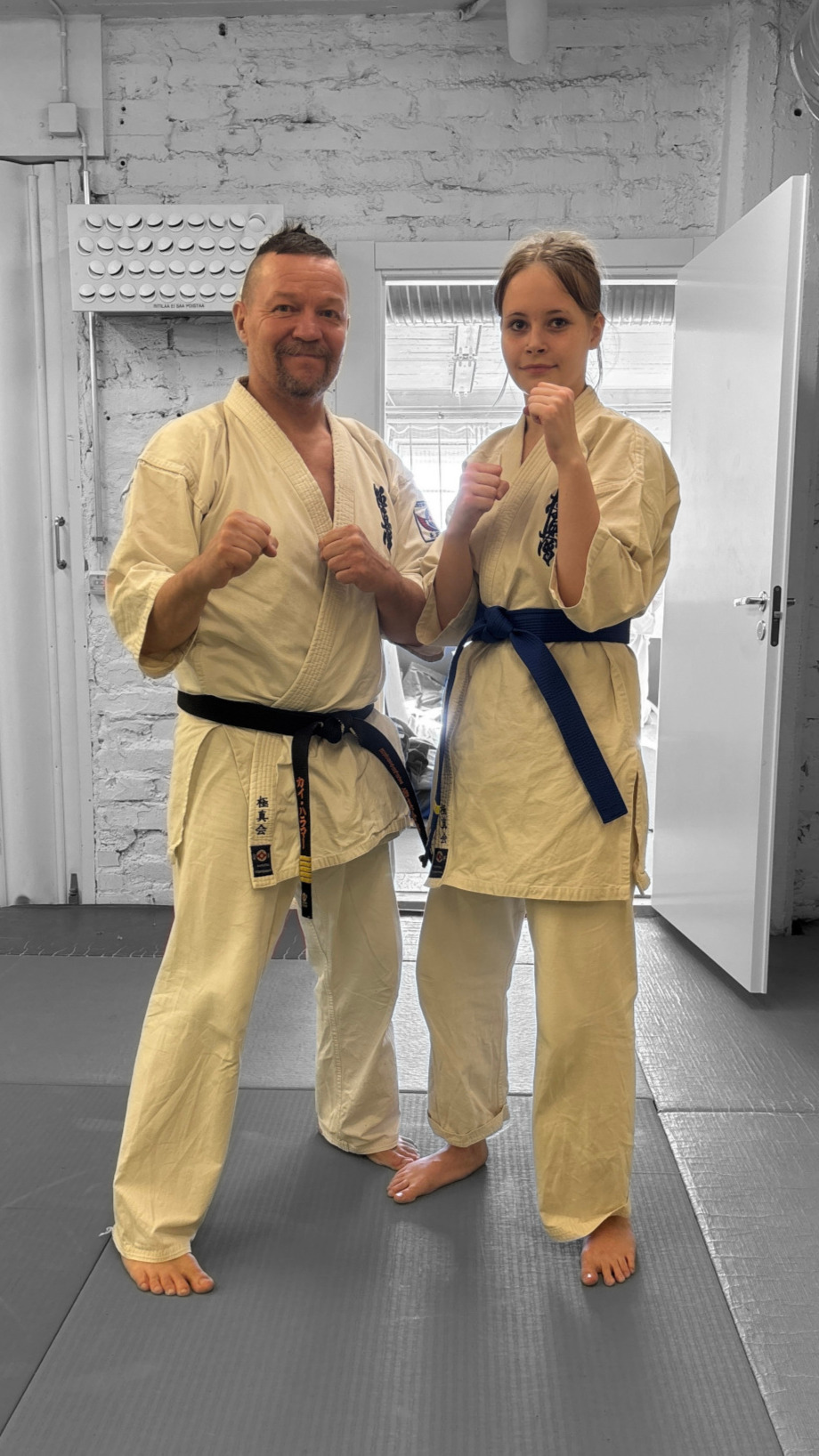
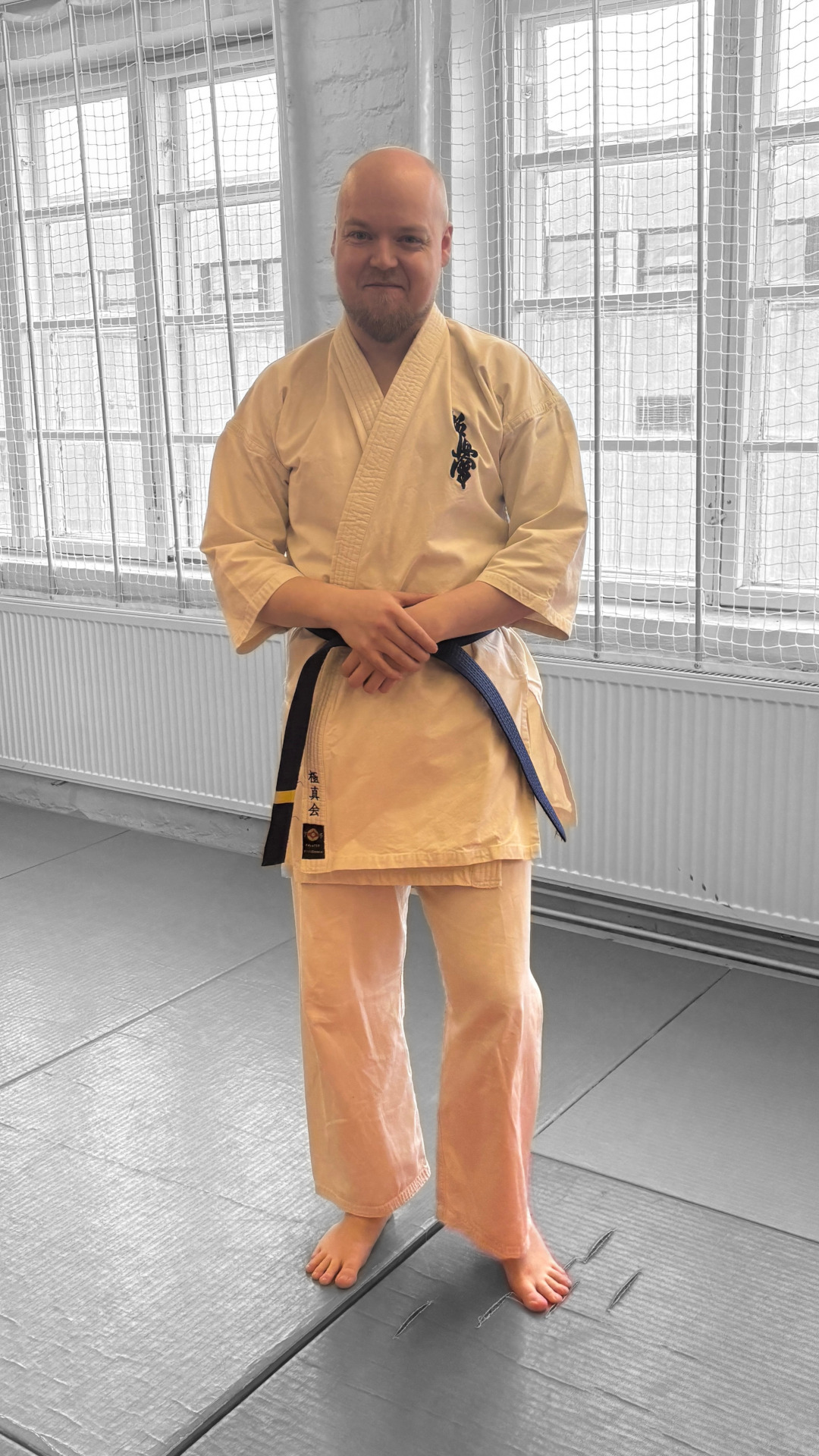
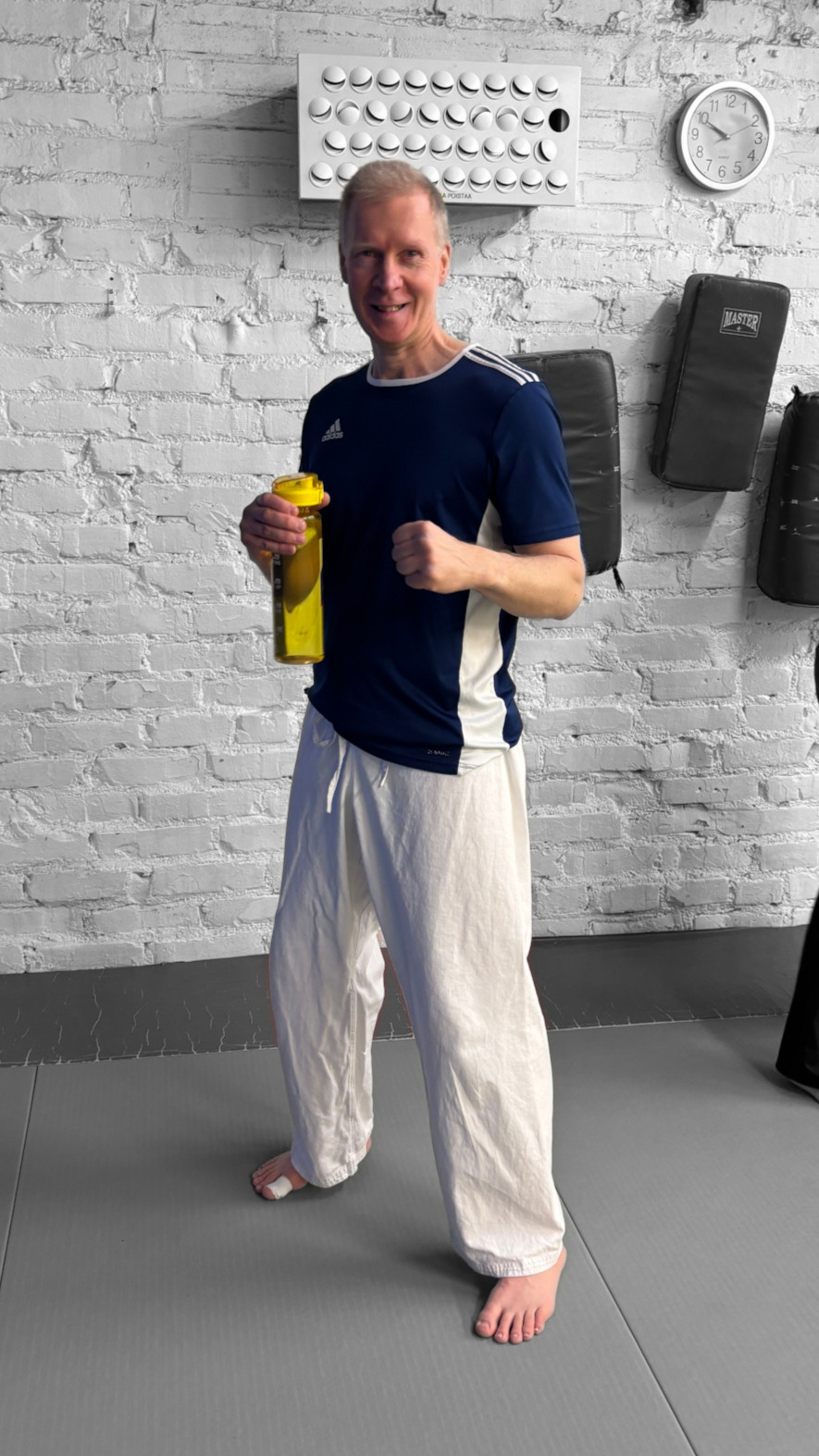
Demanding training sessions and belt gradings do not bring only fatigue and bruises – they also bring people together through shared effort. In the images above, you may see tired faces and backs soaked with sweat, but despite that, there are also feelings of achievement, smiles, joy, and even laughter!
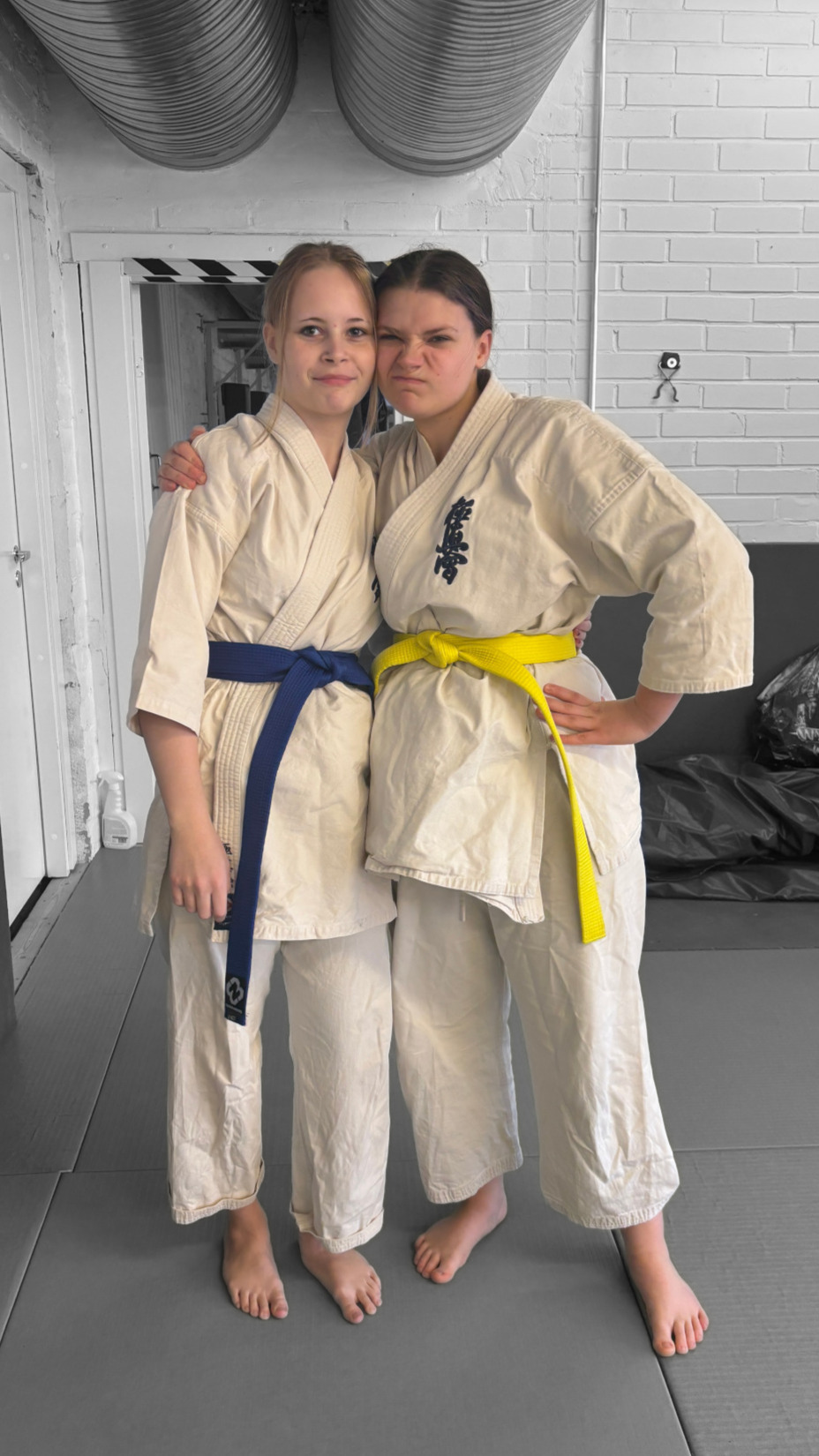
Martial arts are about challenging and developing yourself, but above all, they are about training and growing together. If you have been thinking about starting a new hobby or are looking for a new martial art to support your existing combat sports background, now is your chance to join a great group!